


Where frizzy hair comes from
Frizzy hair is one of the most searched hair concerns, and at Boozyshop we get questions about it every week. The cause sits in the outer layer of your hair. That layer is made of scales that overlap like roof tiles. When they lie flat, your hair reflects the light and feels soft. When they lift, moisture escapes from your hair and your hair pulls moisture out of the air instead. That swelling does not happen evenly, and what you see is frizz.
This is why frizz is worse on a humid day, and why dry or damaged hair is more prone to it. The drier your hair, the more it wants to take from the air. Curly and wavy hair deals with it more, because scales along a bend never lie completely flat.
The four things that make it worse
- Washing and blow drying too hot. Heat lifts the scales. Lukewarm water and a lower heat setting help right away.
- Rubbing your hair dry with a towel. Terry cloth rubs the scales the wrong way. Squeeze your hair dry or use a microfibre towel.
- Drying shampoo. A harsh cleanser strips the oil that keeps your lengths smooth.
- Combing when your hair is dry. Detangle in the shower with conditioner in, not after.
Step 1: wash without drying out
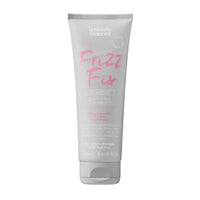
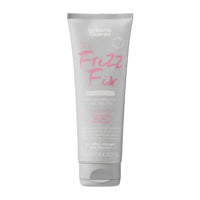
The routine starts in the shower. A mild, sulphate free shampoo cleans without stripping your lengths, and the conditioner afterwards closes the scales again. Leave the conditioner in for a minute and rinse with lukewarm water, not hot.
All shampoos and conditioners are in hair care.
Step 2: a mask, once a week
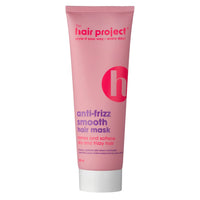
Frizz is almost always dryness. A hair mask puts back what washing and styling take out, and you notice it most in the ends. Once a week is enough, twice if your hair is coloured or bleached.
Apply it to towel dried hair, from your ears down, and leave it in for at least five minutes. See the full range in hair masks.
Step 3: leave-in on wet hair
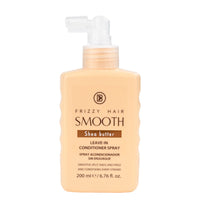
This is the step most people skip, and it is the one that does the most. A leave-in goes on wet hair, straight after the shower. It holds the moisture in while your hair dries, and that is exactly the moment frizz appears.
Spread it through the lengths with your hands or a wide tooth comb and leave the roots alone. More options are in leave in conditioners.
Step 4: heat only with protection
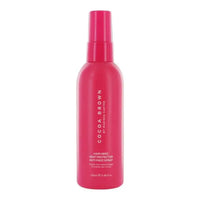
A blow dryer or straightener without protection is the fastest way to get frizz back. Spray a heat protectant on damp hair in thin layers, and keep the dryer on the cooler setting with the airflow pointing down. Drying downwards lays the scales flat, drying against the hair direction lifts them.
Step 5: finish with oil or serum
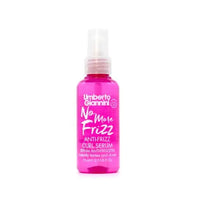
On dry hair you finish. A few drops of serum or hair oil in your palms, rub them together and then only through the bottom half of your lengths. Too much makes hair flat and greasy, so start with less than you think you need. You can always add more.
The full range is in hair oil and serum.
And for on the go
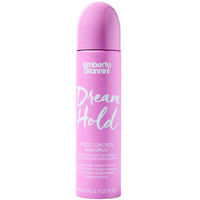
For the loose hairs that come up again after an hour, a light hairspray works better than another layer of oil. Spray from about twenty centimetres away and do not run your hands through it afterwards.
If you have curls
With curly and wavy hair, some frizz comes with the territory, because the scales there never lie completely flat. The approach is the same, with more weight on hydration and less on heat styling. The products that suit it are in the curly girl method.
In short
- Wash lukewarm, with a mild shampoo, and always use conditioner.
- Squeeze your hair dry instead of rubbing it.
- A mask once a week, more often if your hair is coloured.
- Leave-in on wet hair, the step with the biggest effect.
- Never use heat without protection, and dry downwards.
- Finish with a few drops of oil or serum through the lengths.