


What is a concealer and how do I apply a concealer?
A concealer is a concentrated, high-coverage makeup product that you apply locally: under your eyes for dark circles, on a spot, on redness around your nose or on a small pigmentation mark. Under your eyes you choose a shade slightly lighter than your skin, and on blemishes exactly your own skin tone. You apply it in small dots, tap it in and set it with a little powder. Below you can read how to choose the right shade, texture and order.
What does a concealer actually do?
Foundation evens out your whole face with a thin layer. A concealer contains more pigment and is meant for small areas where that thin layer is not enough. That is why concealer often means you need less foundation: you keep your base light and only cover where it is needed. You use concealer to hide, but also to brighten, for example with a lighter shade under your eyes or along the bridge of your nose.
Which concealer shade should you choose?
The rule of thumb is simple. Under your eyes you choose a shade that is half to one shade lighter than your skin, so your eyes look fresher. Go much lighter and the area turns grey or noticeably white, especially on deeper skin. On spots, redness and marks you choose exactly your own skin tone. A lighter shade actually puts a blemish in the spotlight. Also pay attention to your undertone: cool, neutral or warm. Test a shade on your jawline in daylight, not on your hand.
When do you need a colour corrector?
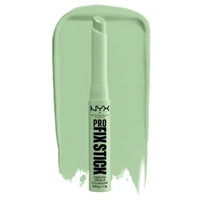
Sometimes discolouration is so strong that a skin-tone concealer just sits on top looking grey. That is when a colour corrector helps. It works with the colour wheel: a colour neutralises its opposite. Green tones down redness, such as a red spot or flushed cheeks. Peach and apricot neutralise blue and purple circles, especially on medium to deep skin. Yellow and pink brighten light discolouration on fair skin. Apply the corrector in a very thin layer and put your usual concealer or foundation on top. The NYX Professional Makeup Pro Fix Stick Correcting Concealer Correctors is a creamy stick in shades including green, yellow and pink, with medium coverage that resists creasing.
Which texture suits you?
Concealer comes in three main forms. A liquid concealer with an applicator is the easiest to blend and works well under the eyes. A stick is firm and handy for quickly covering a spot. A cream from a pot or palette gives the most coverage and is great for stubborn marks. On top of that you choose between a matte and a hydrating finish. Matte lasts longest on oily skin and on blemishes, hydrating looks softer on dry skin and under the eyes, where the skin is thin and quickly shows fine lines.
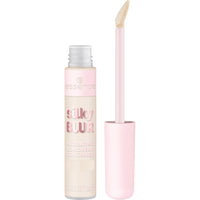
For under the eyes, the Essence Silky Blur Hydrating Longwear Concealer is a lovely choice. The light, liquid formula with glycerin and sodium hyaluronate gives buildable medium coverage with a silky matte finish, is waterproof and has an angled applicator that lets you work precisely.
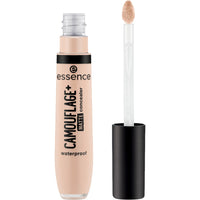
If you want more coverage, the Essence Camouflage+ Matte Concealer is its stronger sibling. This liquid concealer gives full coverage, dries matte and stays put all day thanks to its waterproof formula. Great for redness, marks and oily skin.
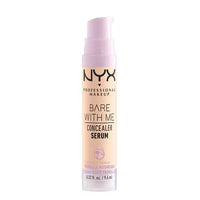
If you have dry or sensitive skin and mainly want a natural result, take a look at the NYX Professional Makeup Bare With Me Concealer Serum. It gives medium to high coverage with a natural finish and contains tremella, centella asiatica (cica) and green tea extract.
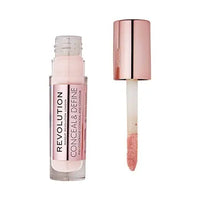
The Revolution Conceal and Define Concealer is intensely pigmented and dries matte without settling into fine lines and pores. In a shade two to three shades deeper than your skin you can also use it to contour.
| Type of concealer | Finish | Coverage | Best for |
|---|---|---|---|
| Liquid, hydrating | Natural to soft matte | Light to medium | Under the eyes, dry skin |
| Liquid, matte | Matte | Medium to full | Redness, spots, oily skin |
| Stick | Natural | Medium | Quick spot coverage, on the go |
| Cream or palette | Satin to matte | Full | Stubborn marks, mixing shades |
| Colour corrector | Natural | Thin layer | Neutralising strong discolouration |
How do you apply concealer?
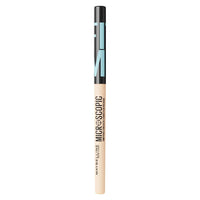
Start with hydrated skin, especially under your eyes. Place a few small dots where you need coverage, under the eye mainly in the inner corner and on the darkest area. Wait a few seconds, then tap the concealer in with your ring finger, a damp sponge or a small concealer brush. Tapping instead of rubbing keeps the coverage in place. Build up two thin layers rather than one thick one. On a spot, place the concealer exactly on the mark and only blend away the edge. The Maybelline Fit Me Microscopic Concealer is made for that precision: a creamy gel with a fine 3 mm tip, and the formula contains 0.5% salicylic acid and chamomile.
If dark circles or puffy eyes are your main concern, also read our tips to get rid of dark circles.
Concealer before or after foundation?
The most common order is: skincare, primer, colour corrector if needed, foundation and then concealer. Because your foundation already evens out part of the discolouration, you need less concealer afterwards and the overall result looks lighter. If you skip foundation, apply concealer right after your skincare. Then set it with a very thin layer of loose powder, especially under your eyes, because too much powder actually emphasises fine lines. You can read more about the order of every step in the best order for your makeup routine.
Frequently asked questions
How much lighter should concealer be under your eyes?
Half to one shade lighter than your skin is enough. Much lighter makes the area look grey or white. On spots and marks you choose exactly your own skin tone.
Why does my concealer settle into fine lines?
Usually it is too much product, skin that is too dry or too much powder. Hydrate first, use a thin layer, tap it in and set with very little loose powder.
Can you wear concealer without foundation?
Yes. Apply it after your skincare, only on the areas you want to cover, and tap the edges in well so you do not see a transition.
Which corrector colour works on redness?
Green. Apply a very thin layer to the red area and put your concealer or foundation on top.